
NEAT and Daily Movement
Published February 2026
Educational Note: This article explains scientific concepts about physical activity and energy expenditure. It is not personalised advice. Consult a healthcare professional for guidance related to your individual situation.
Introduction
Non-exercise activity thermogenesis (NEAT) refers to the energy expended during daily activities outside formal exercise: occupational tasks, fidgeting, postural maintenance, and routine movement. NEAT can account for a substantial portion of total daily energy expenditure and varies significantly between individuals and within individuals based on lifestyle factors. Understanding NEAT provides perspective on why everyday movement matters.
What Constitutes NEAT
NEAT encompasses all physical activity that isn't sleeping, eating, or formal exercise. This includes:
- Occupational Activity: Movement required by your work or daily tasks.
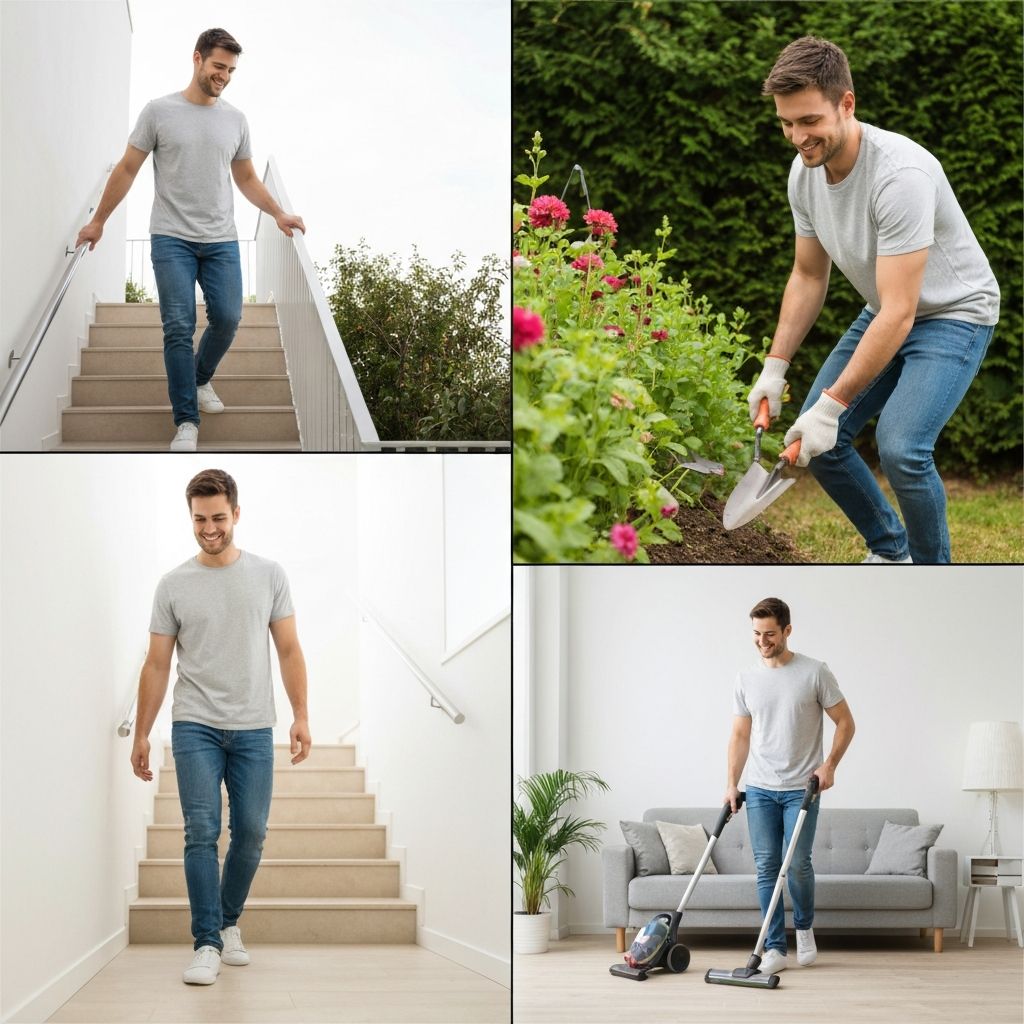
- Leisure Activity: Non-exercise recreation like gardening, cleaning, or playing with children.
- Fidgeting and Postural Maintenance: Small muscle contractions throughout the day.
- Ambulation: Walking for routine purposes rather than deliberate exercise.
NEAT's Contribution to Energy Expenditure
NEAT can contribute 15-30% of total daily energy expenditure, with substantial individual variation. People with more active occupations or lifestyles accumulate significantly more daily movement than sedentary individuals. This difference has metabolic relevance when considering total energy expenditure.
Individual Variation in NEAT
NEAT varies naturally between individuals based on occupational demands, living environment, climate, and behavioural factors. A construction worker will accumulate different NEAT than an office worker. Similarly, seasonal changes or changes in living situation affect NEAT. This natural variation is relevant to understanding why energy requirements differ between individuals.
Movement Quality and Type
Different types of daily movement engage the body differently. Activities that require sustained muscle engagement or work against gravity (like climbing stairs or gardening) require more energy than sedentary activities. Everyday movement variety engages different muscle groups and movement patterns.
The Built Environment and NEAT
The physical environment influences how much daily movement occurs. Living in an environment that requires walking, navigating stairs, or performing manual tasks generally results in higher NEAT than highly automated or sedentary environments.
NEAT vs. Formal Exercise
NEAT and formal exercise are distinct components of total activity-related energy expenditure. Both contribute to total energy expenditure, but they occur through different mechanisms and at different intensities. Neither is inherently superior; both contribute to overall physical activity levels.
Increasing Daily Movement
Small, cumulative increases in daily movement can meaningfully increase total activity-related energy expenditure. Examples include walking instead of driving, using stairs, standing during activities, or engaging in active leisure. These approaches are sustainable because they integrate into daily life rather than requiring dedicated exercise time.
Conclusion
NEAT—the energy expended through daily movement outside formal exercise—can represent a substantial proportion of total daily energy expenditure. Individual variation in NEAT is significant and influenced by occupational, environmental, and behavioural factors. Understanding NEAT's role provides perspective on why everyday movement and activity patterns matter in the broader context of energy balance.